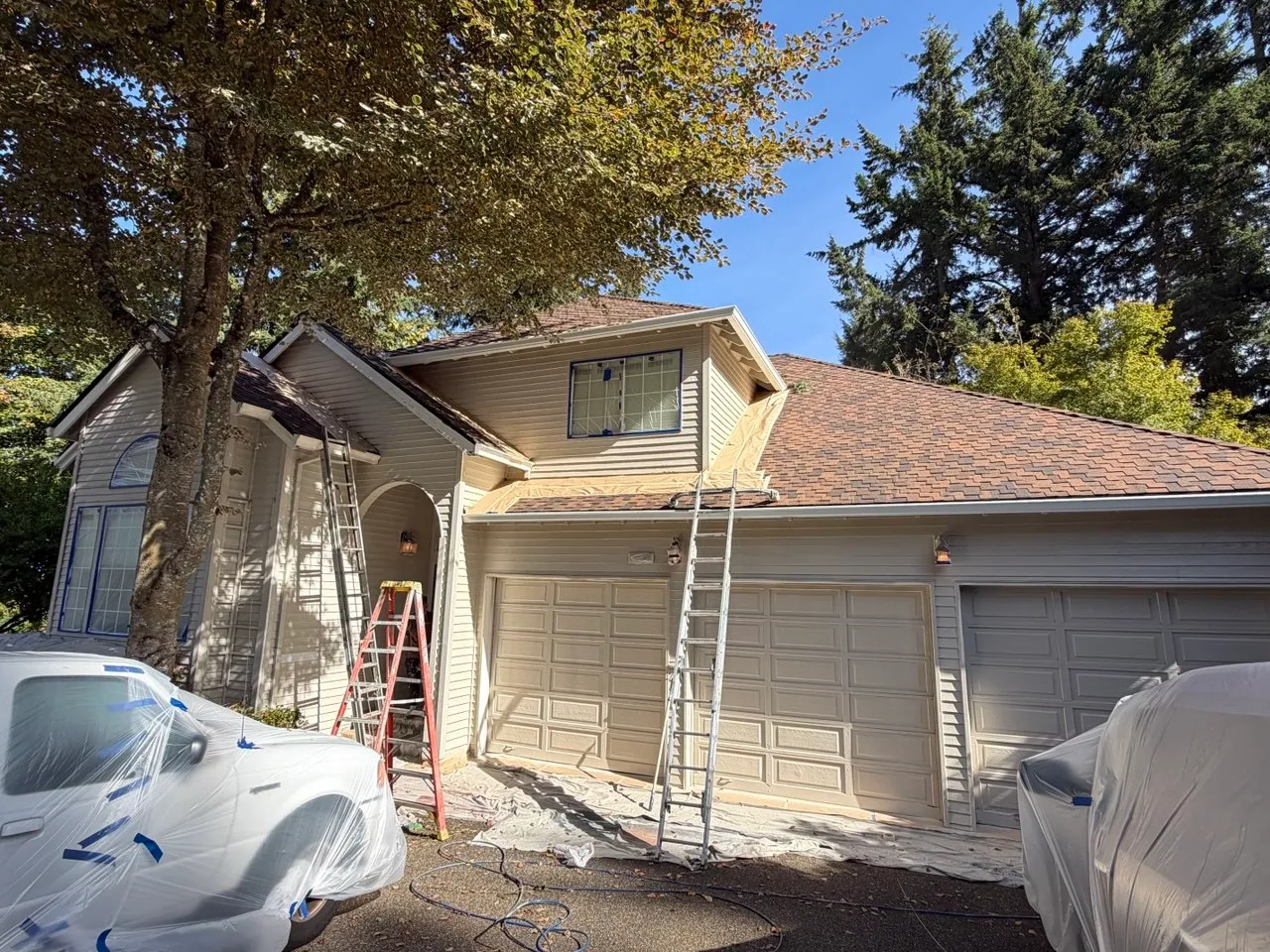
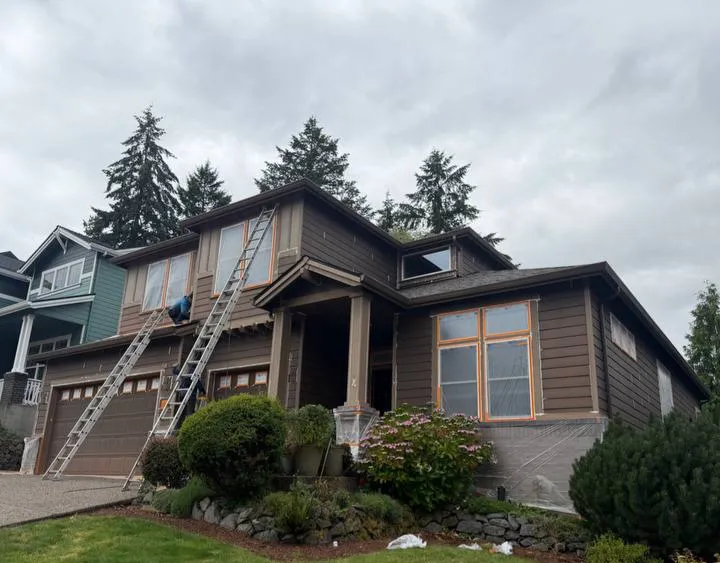
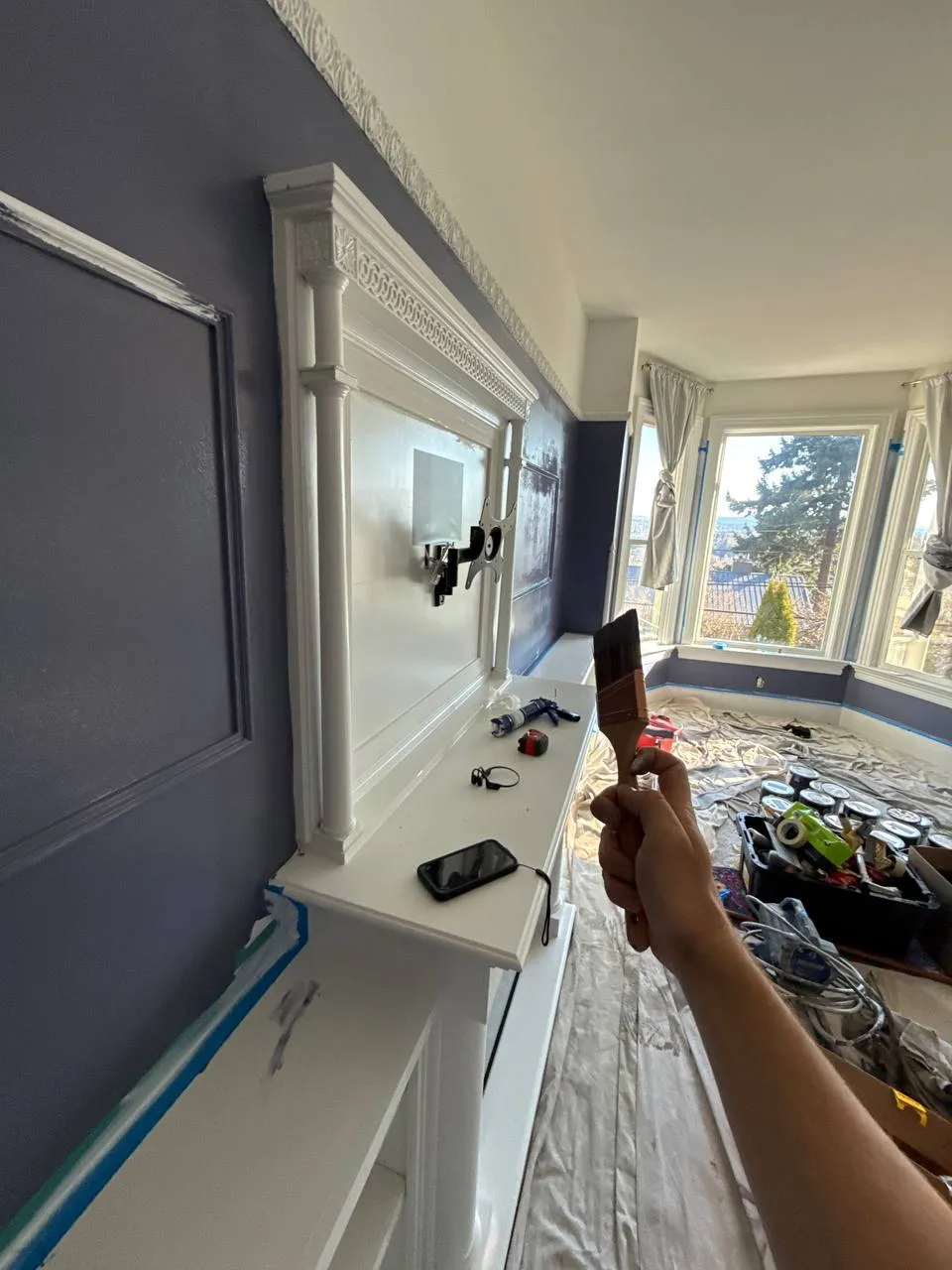
There’s no honest one-size-fits-all price for painting a house in Portland. Two homes with the same square footage can be priced very differently, because most of the cost is labor — and most of that labor is preparation. As a starting point, our online calculator uses about $3.50 per square foot of home, and every project gets a free, written on-site estimate with the exact number.
Below is what actually moves the price up or down, how to read and compare quotes, and where cutting corners ends up costing more a few winters later.
What you’re really paying for
A painting quote covers four things: labor (washing, scraping, sanding, priming, caulking, masking, painting and cleanup), materials (paint, primer, caulk, masking paper and tape), equipment (ladders, staging, sprayers, sometimes a lift) and overhead (licensing, bonding, liability insurance and the time spent on estimates and scheduling).
Paint itself is usually a smaller share of the total than people expect. The biggest variable is how many hours it takes to get the surface ready — which is why a careful look at your house matters more than its square footage alone.
The biggest cost factors
Size and height
More wall area means more paint and more hours, but height matters almost as much. Two- and three-story walls, steep lots and tall gable ends need extra ladder work, staging or a lift, and they take longer to prep and paint safely.
Siding type
Cedar lap and shingle siding — common in older Portland neighborhoods — is textured and thirsty, so it takes more primer and paint than smooth fiber cement. Stucco and masonry need products made for those surfaces, such as a masonry primer like Loxon where it’s called for. Vinyl can be painted, but only in colors made for vinyl.
Condition and preparation
Peeling paint, bare gray wood, failed caulk and mildew all add prep time. Homes built before 1978 may contain lead paint, and scraping or sanding them requires lead-safe work practices, which takes longer and costs more than a standard prep.
Repairs
Rotted trim, soft siding boards and damaged window sills have to be fixed before paint goes on. A good estimate flags these up front, usually as a separate line, so there are no surprises halfway through the job.
Number of colors and level of detail
A single body color with one trim color is the most efficient. Accent colors, contrasting window sash, shutters, decorative Craftsman or Victorian details and multiple doors all add careful brushwork.
Access around the house
Landscaping tight against the walls, decks, porch roofs, steep driveways and limited parking all slow the work down. Trimming shrubs back and clearing the perimeter before the crew arrives genuinely helps.
Product line
We use Sherwin-Williams paints. Moving from a solid mid-range line like SuperPaint to premium lines like Duration or Emerald raises the material cost, but on a properly prepped house better paint generally holds its color and film longer — often the better value over the life of the job.
How to read and compare painting quotes
When you have two or three bids in hand, compare them line by line instead of looking only at the total:
- Scope by surface: siding, trim, fascia and soffits, doors, garage door, railings — what’s in and what’s out.
- Preparation spelled out: washing, scraping, sanding, priming bare wood, caulking joints and windows.
- Products named: the actual paint line and sheen, not just “premium paint.”
- Number of coats: one coat and two coats are very different jobs.
- Exclusions: wood repairs, gutters, decks and fences are often listed separately.
- Licensing and insurance: in Oregon, contractors must be licensed with the Construction Contractors Board (CCB); in Washington, registered with L&I. You can look up both online before you sign.
- Schedule and payment terms: deposit, progress payments and when the final payment is due.
If one bid is far below the others, the difference is almost always in the prep and the number of coats.
Why the cheapest bid often costs more
The fastest way to lower a price is to skip work you can’t see on day one: no washing, painting over loose paint, no primer on bare wood, a single coat, no caulking. The house looks fine when the crew leaves. In our climate, the problems show up after a couple of wet winters — peeling on the sunny sides, mildew on the shaded ones, water getting in behind failed caulk.
Repainting early, plus the wood repairs that come with water damage, costs far more than doing it properly once. Our guide on how often to repaint a house in the Pacific Northwest covers the warning signs.
Ways to keep the cost reasonable without cutting corners
- Book early. The dry season is short. Getting your estimate in late winter or spring gives you schedule options — see the best time to paint an exterior in Portland.
- Keep the color scheme simple. A body color, a trim color and one accent for the front door look great and keep labor down.
- Do the easy prep yourself. Trim shrubs away from the walls, move outdoor furniture and planters, and clear the driveway.
- Fix small problems early. Re-caulking and washing mildew off every year or two keeps a paint job from turning into a repair job.
- Combine projects. Quoting exterior, interior or flooring work together can make scheduling more efficient.
Interior painting costs follow the same logic
Inside, the price depends on the number of rooms, whether ceilings, trim and doors are included, the condition of the walls, and how dramatic the color change is — going from a dark color to a light one often needs a primer or an extra coat. See our interior painting page and the checklist on how to prepare your home for interior painting.
Getting an exact price
The calculator gives you a ballpark; the real number comes from seeing the house. We walk every side of your home, note what needs prep or repair, and give you a clear written quote — free and with no obligation, anywhere in our service area across Portland Metro and Clark County.
Call (971) 571-4778 or request a free estimate online, and learn more about how we approach exterior painting.