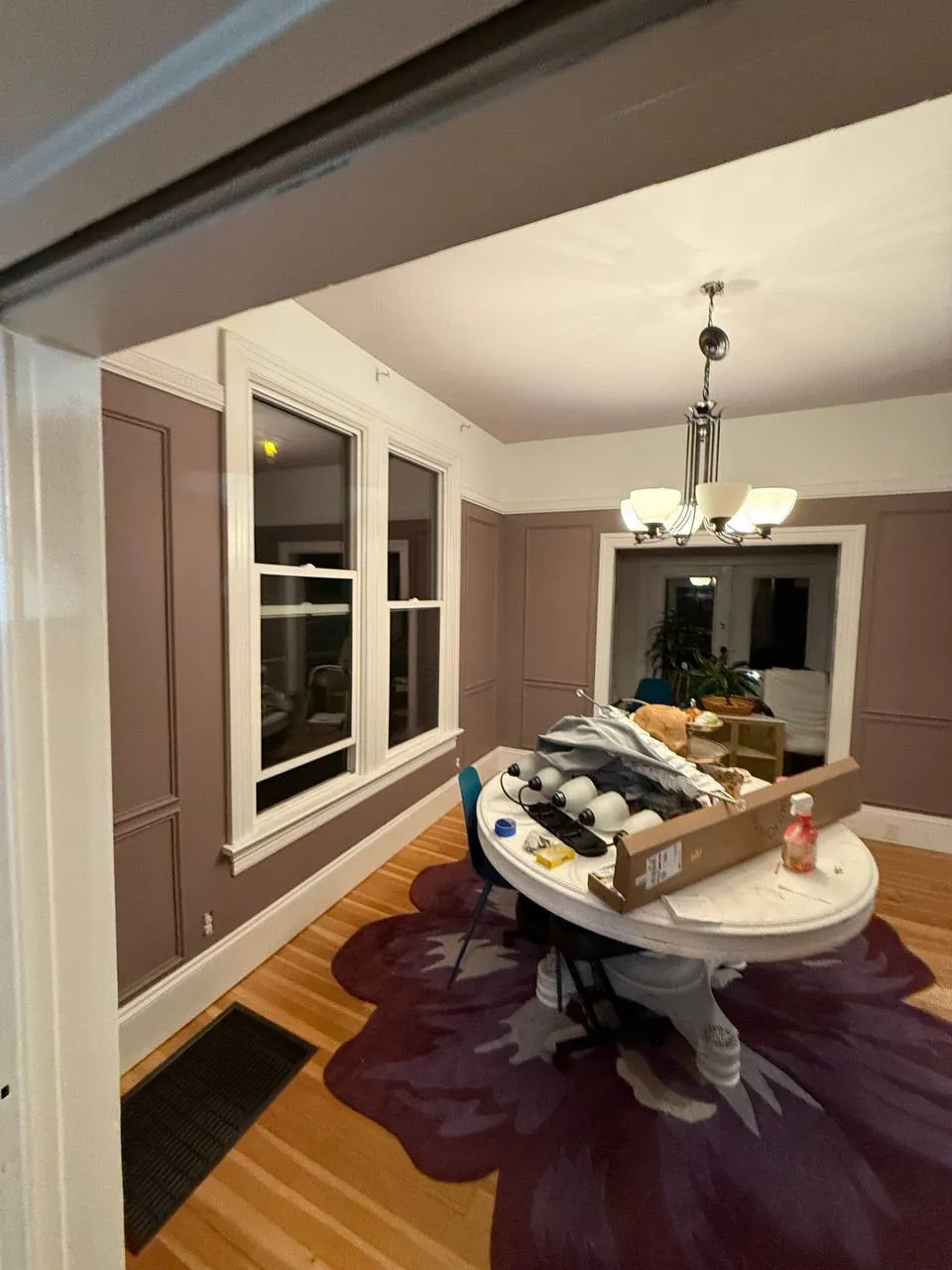
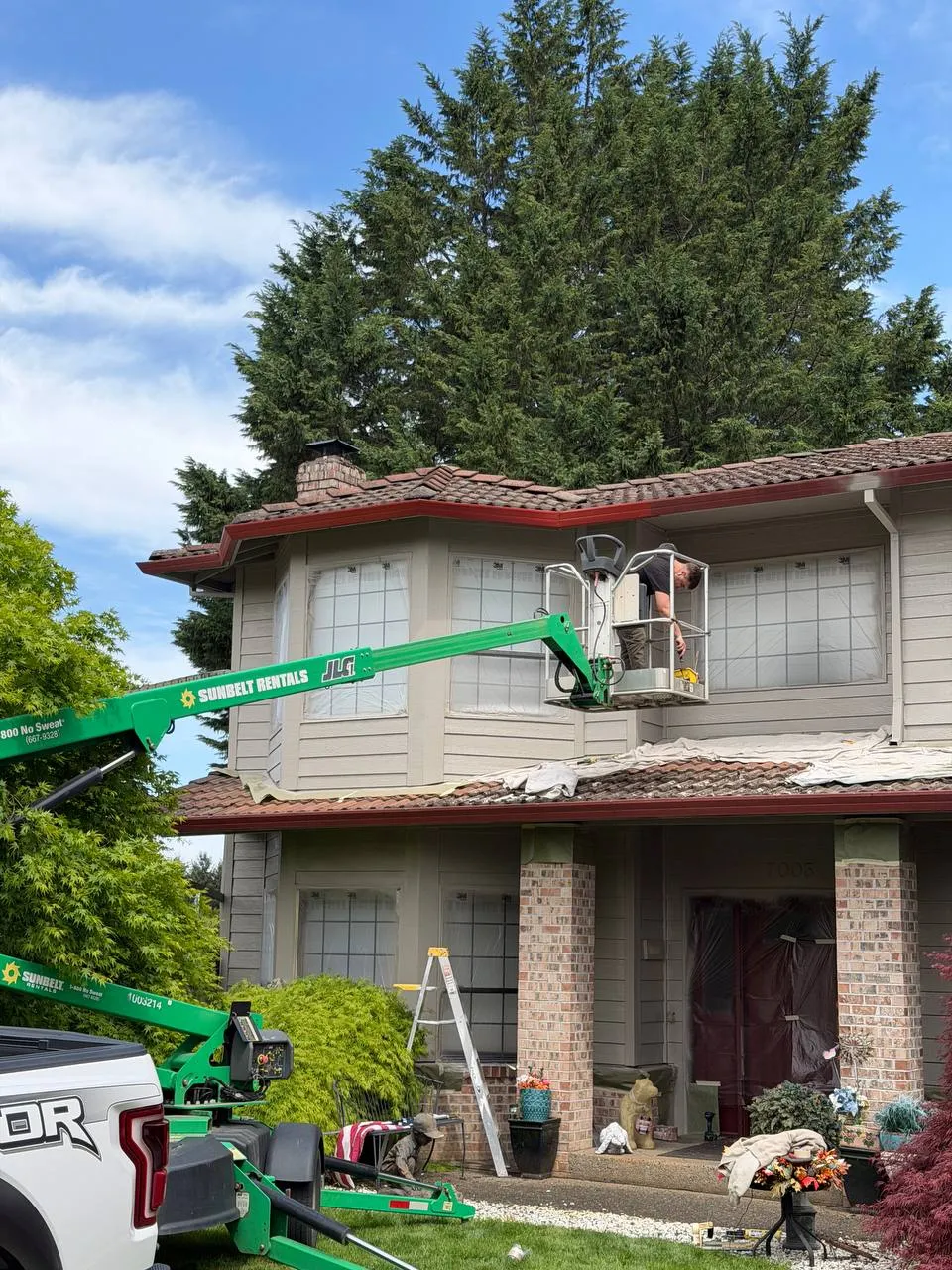
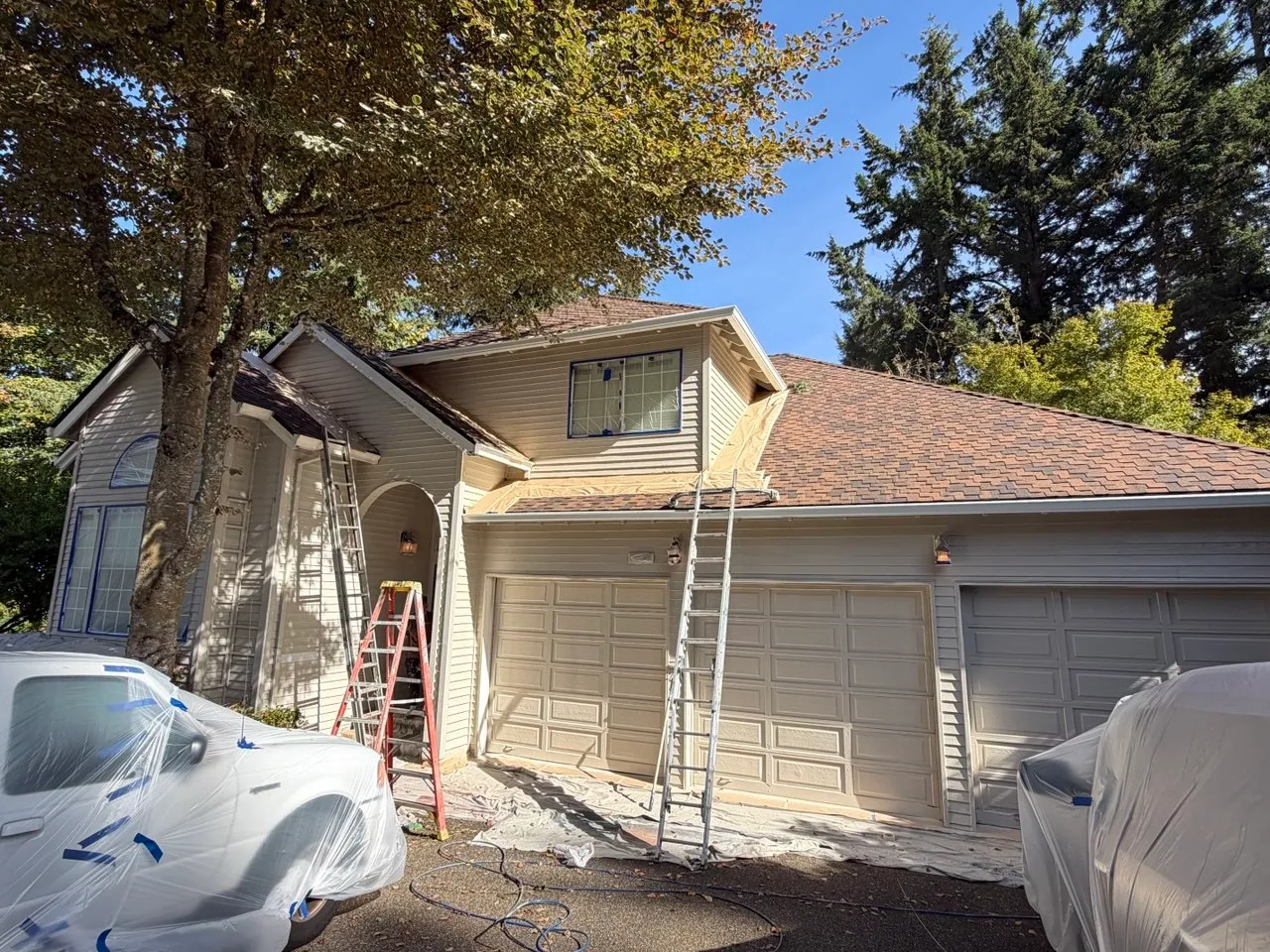
A smooth interior paint job is mostly preparation — some of it done by the painting crew and some by you. A little planning before the painters arrive means the work goes faster, your belongings stay safe and the finished rooms look the way you pictured them.
Here’s a practical checklist: what to do a week or two ahead, what to handle in the last few days, what a professional crew should take care of, and how to live comfortably in the house while it’s being painted.
One to two weeks before
- Finalize colors. Paint large samples on a couple of walls and look at them in the morning, afternoon and evening. Portland’s gray winter light can make colors look cooler and darker than they do in the store.
- Choose sheens. Matte, eggshell, satin or semi-gloss — each surface has a sensible choice. Our paint sheen guide goes room by room.
- Confirm the scope. Walls only, or ceilings, trim, doors and closets too? Write it down so everyone is on the same page.
- Point out problem areas. Water stains, cracks, old patches or peeling spots should be mentioned during the estimate so they’re planned for.
- Ask about low-VOC options if anyone in the house is sensitive to odors.
- Plan around your calendar. Avoid scheduling right before guests, holidays or a move-in date in case a day is added.
A few days before: your part
- Take down pictures, mirrors, shelves and wall décor. Keep screws and hardware in labeled bags.
- Pack up small items, knickknacks and anything fragile or valuable, and move them out of the rooms being painted.
- Empty bookshelves and cabinets that sit against the walls.
- Clear out closets that are part of the job.
- Decide with your painter who removes curtains, blinds and rods — agree on it in advance.
- Plan a quiet room for pets, away from the work.
- Make sure there’s parking and a clear path for the crew to bring in equipment.
What a professional crew should handle
A quote for interior painting should include the protection and prep work, not just the paint. Expect the crew to:
- move large furniture to the center of the room and cover it;
- protect floors with drop cloths and, where needed, paper or floor protection;
- remove switch plates and outlet covers and mask fixtures;
- patch nail holes and small cracks, sand and spot-prime the patches;
- caulk gaps between trim and walls;
- clean up at the end of each day and put everything back at the end of the job.
If a quote doesn’t mention these steps, ask before you sign. They’re what separates a clean, lasting finish from one where patches and drips show through.
Kids, pets and fresh paint
- Choose low- or zero-VOC paint for bedrooms and nurseries; many premium lines, including Sherwin-Williams Emerald and Duration Home, offer low-odor options.
- Ventilate with open windows when the weather allows, and run fans or the HVAC system.
- Keep pets out of rooms with wet paint — paw prints on a fresh wall are no fun for anyone.
- Keep children away from ladders, tools and open paint cans during the workday.
- If someone in the house has asthma or chemical sensitivities, mention it during the estimate so products and schedule can be planned around it.
How long it takes and living in the house
A single room often takes a day or two, depending on prep and whether ceilings and trim are included. A whole-home interior usually takes several working days, more for larger homes or heavy prep. Most crews work room by room — typically ceilings first, then walls, then trim and doors — so you can keep using the rest of the house.
Paint dries to the touch quickly but takes longer to harden fully. For the first couple of weeks, avoid scrubbing walls, wait a few days before re-hanging pictures, and don’t push furniture tight against freshly painted walls right away.
A note on older homes
Many homes in close-in Portland neighborhoods were built long before 1978. Homes from that era may contain lead paint, and sanding or scraping it creates hazardous dust. That work requires lead-safe practices, so if your home is older, bring it up before work begins and ask how it will be handled.
After the painters leave
- Do a final walkthrough together in good light and point out anything that needs a touch-up.
- Keep a labeled container of each color and sheen for future touch-ups, stored indoors where it won’t freeze.
- Write down the exact color names, product lines and sheens for each room.
Ready to schedule?
Interior work isn’t weather-dependent, which makes fall and winter a great time for it. Many homeowners pair painting with new floors — walls and ceilings first, then flooring installation, then final trim. Learn more about our interior painting process, or call (971) 571-4778 and request a free estimate.